A customer once showed me a small hook they'd bought somewhere else. It looked fine — clean layers, a nice color. It snapped the first time they hung a set of keys on it. The break was perfectly flat, right along a layer line. That flat break told the whole story: the part wasn't weak because of the plastic. It was weak because of how it was printed.
Prints Are Strong in One Direction Only
A 3D printer builds a part one thin layer at a time, melting each new layer onto the one below it. The plastic inside a layer is solid. The bond between two layers is not — it is always the weakest point of the print. Pull a part apart along its layers and it gives way far sooner than the same plastic would as a solid block. That is why orientation is the single biggest strength decision in a print: the same hook printed standing up can snap under a set of keys, while the same hook printed lying flat holds them without a problem.
Rule of thumb: if a part will be pulled, bent or loaded, the layer lines should run across the force — never along it.
The Three Ways a Print Actually Fails
- Layer separation — a flat, clean break right along a layer line. Usually caused by printing too cool, too fast, or in a draft.
- Thin walls snapping — a wall printed with a single pass of the nozzle has almost no strength. More perimeters fix it.
- The wrong material for the job — PLA is stiff but brittle. A PLA clip flexed again and again will crack where PETG would bend.
What Makes a Print Strong: Four Levers
Strength comes from four decisions, and material is only one of them. Orientation comes first: print the part so the load pulls along the layers, not across them. Then walls: extra perimeters usually add more real-world strength than extra infill, because the outer shell carries most of the load. Infill comes third — 15 to 20 percent is plenty for a decorative piece, while a part that holds weight wants a denser fill, and patterns like gyroid spread the load evenly. And finally the material: PLA is rigid and great for display pieces, PETG is tougher with better layer adhesion for functional parts, and ASA holds up outdoors against sun and heat.
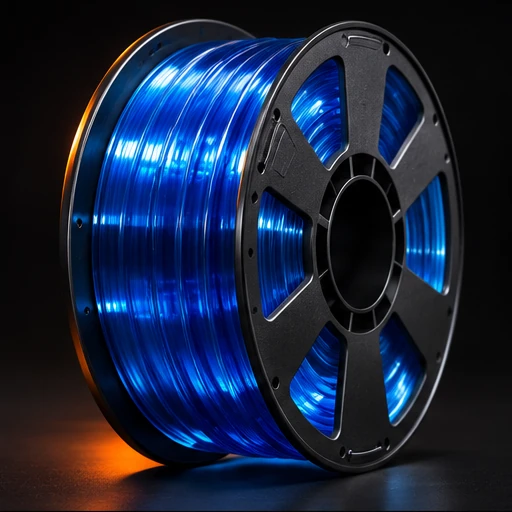 Illustrative imagePETG Basic
A Quick Check Before You Buy or Order
- Look at the layer lines in the photos — if they run across the direction the part will be loaded, that is a red flag.
- Check the walls: thin, single-line walls on a part that holds weight are a warning sign.
- Match the material to the job: parts that flex or live outside should not be plain PLA.
- If a part has to hold weight, ask about infill and perimeters — a serious seller knows the answer.
This is how we print at E&J Precision 3D: parts are oriented for the load they will actually carry, with enough perimeters and the material matched to the job — not just the color that looks best in the photo. And when you order a custom piece, tell us what it has to do, not only what it should look like. A hook that holds keys, a bracket that takes weight, a clip that gets flexed every day — each one gets printed differently, on purpose.
Tell us what it needs to survive — we'll pick the material and the orientation.
Browse the shop