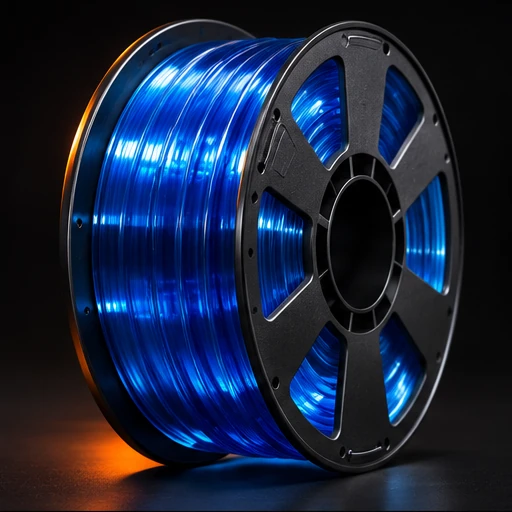
 Illustrative image
PETG family
PETG Basic
The practical step up from PLA for parts that have a job to do.
PETG combines easy printing with better toughness, heat resistance and water resistance than PLA. It bends a little before breaking instead of snapping. It tends to string, so very fine detail is harder to get clean.
Properties
General comparison between materials, from 1 to 5. Not lab measurements.
Print settings
- Nozzle temperature
- 230–260 °C
- Bed temperature
- 65–85 °C
- Print speed
- Standard speeds
- Finish
- Glossy
- Drying
- Benefits from drying before printing, especially after being left open.
- Enclosure & ventilation
- Not required. Prints best with good airflow.
- Storage
- Sealed bag or box with desiccant, away from sunlight.
- Printer compatibility
- AMS compatibility
Temperatures are general ranges and change with brand and formula. The manufacturer’s data sheet always comes first.
Recommended for
- Functional parts and brackets
- Parts that get damp
- Containers and holders
- Light outdoor use
Not recommended for
- Very fine decorative detail
- Parts that need to be very stiff
- High-temperature environments